History of Jaipur
Jaipur gets its name from its founder Maharaja JaiSingh II (1693-1744) the great warrior and astronomer. He came to power at the age of II on the death of his father Maharaja Bishan Singh. The maharaja was told that his son would achieve greatness and he set out to ensure that Jai Singh Had a good education. He was trained by the best teachers and scholars in art, science, philosophy and military affairs. His scholastic background matched his innate wits When Jai Singh was 15, emperor Aurangzeb summoned hi to court. Jai Singh had contravened the agreement of not waging war against the Marathas in the Deccan. On metting Jai Singh, Aurangazb,clasping his hand in greeting, demanded an explanation.
Maharaja Ram Singh also built Ramgarh lake to supply water to the burgeoning city. Duringh the 19th and 20th centuries the city’s population spread beyondits walls. In 1922 Man Singh II, Jaipur’s Maharaja ascended the throne and it was during his reign that civic buildings like the secretariat, schools, hospitals and other public buildings were built. After independence, Jaipur merged with the states of Jodhpur,Jaisalmer and Bikaner to become the greater Rajasthan union. The title was later revoked and in 1956, Jaipur became the capital of the state of Rajasthan.
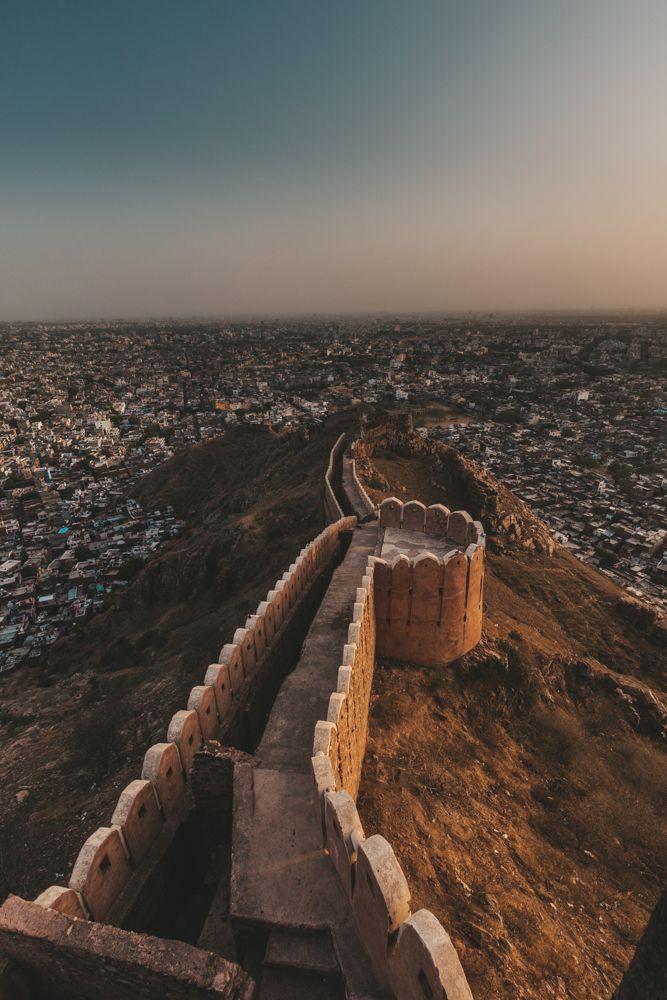
The story goes that in 1876, the Prince of Wales visited India on a tour. Since the colour pink was symbolic of hospitality, Maharaja Ram Singh of Jaipur painted the entire city pink. The pink that colours the city makes for a marvellous spectacle to behold. Jaipur rises up majestically against the backdrop of the forts Nahargarh, Jaigarh and Garh Ganesh Temple.